
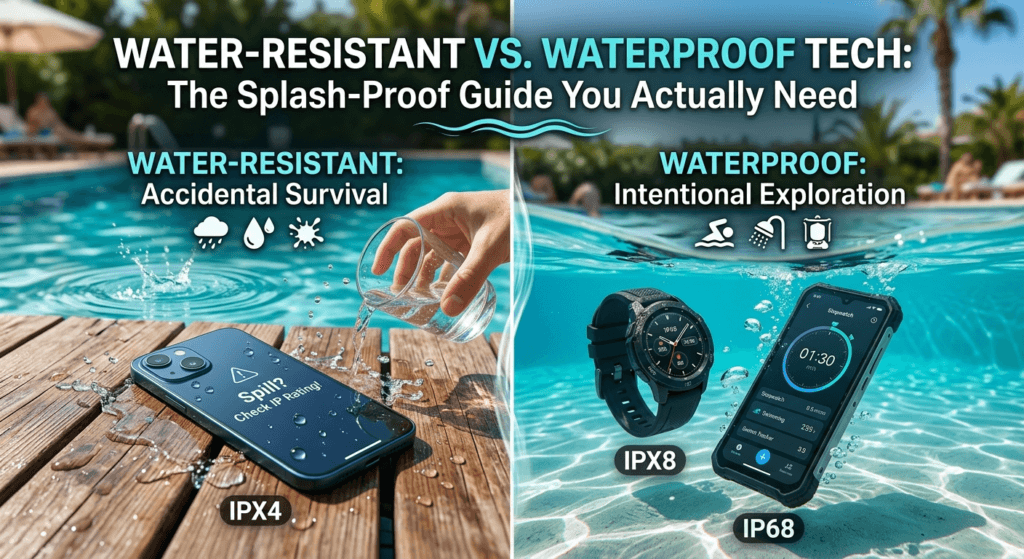
We’ve all been there. You’re lounging by the pool, or maybe just doing the dishes, and your phone takes a sudden, terrifying dive into the water. In that split second of pure panic, you try to remember: Wait, did the box say this thing was water-resistant or waterproof?
In the tech world, brands love to throw these terms around like they mean the exact same thing. Spoiler alert: they don’t. Let’s break down the jargon without the boring tech-speak so you can protect your gear and know exactly how much splash your gadgets can actually handle.
💧 Water-Resistant: The “Accidental Spill” Shield
Think of water-resistance as the lowest level of protection. If a device is labeled water-resistant, it means it is built to resist the penetration of water to some degree, but it is definitely not immune to it.
- How it works: Manufacturers usually apply a light water-repellent coating to the internal circuits or design the physical body with tighter seals.
- What it can handle: Light rain, heavy sweat during an intense workout, or an accidental splash from a spilled glass of water.
- What it cannot handle: Being submerged in the bath, taken for a swim, or dropped into a bucket of water.
- How it works: Heavy-duty rubber gaskets, tightly sealed ports, and robust glue barriers keep the water entirely out of the delicate electronics.
- What it can handle: Accidentally dropping your phone in the toilet, tracking your laps in a swimming pool, or taking a shower with your smartwatch on.
- What it cannot handle: Deep-sea diving, high-pressure water sports, or being left underwater indefinitely.
- The first number (6) is for solid protection (like dust and sand).
- The second number (8) is the one we care about today: water protection.
- IPX4: Protected against splashes from any direction. Fine in light rain or a sweaty gym session.
- IPX7: Can be submerged up to 1 meter for 30 minutes. It survives a quick drop in the sink or the shallow end of a pool.
- IPX8: Can be submerged deeper than 1 meter (usually up to 1.5 to 3 meters) for 30 minutes or more. Safe for swimming and accidental deeper drops.
- Chlorine and Salt Water are Enemies: IP ratings are tested in labs using pure, freshwater. Chlorine from swimming pools and salt from the ocean can easily corrode the rubber seals and ruin your device, even if it’s “waterproof.”
- Wear and Tear is Real: Dropping your phone or exposing it to extreme heat (like leaving it in a hot car) degrades the waterproof seals over time. A phone that was perfectly waterproof on day 1 might not be waterproof on day 300.
- Liquid Damage Voids Warranties: This is the ultimate kicker. Even if a phone is marketed heavily as waterproof, if water somehow gets inside, almost all manufacturers will refuse to cover the repair costs under standard warranty.
Why Knowing the Difference Matters for Your Wallet
Before we look at the official charts, let’s understand why mixing up water-resistant vs waterproof can cost you thousands of rupees.
Most people buy a smartwatch or a phone thinking it can handle anything. But if you take a water-resistant device to a pool party, the internal circuits will fry instantly. Knowing the exact limits of your technology helps you choose the right product and ensures you don’t accidentally destroy your favorite electronic items.

Test, message – Thank you!